MFA MAUI and Tonga U19: Strengthening Pacific Football Pathways Through Culture
When Nga whanapoikiri Maori o Aotearoa – MAUI and the Ton ga U19 Men’s National Team came together in Auckland, the occasion carried more than the weight of a football match.
It was a moment shaped by a long relationship, cultural pride, and a shared Pacific purpose.
The Tonga U19 Men’s National Team were in Aotearoa New Zealand recently to prepare for the OFC U19 Championship Qualifiers in the Cook Islands, when the opportunity emerged for Māori Football Aotearoa to provide a meaningful preparation fixture. Although the turnaround was short notice, the kaupapa was clear: support a Pacific nation in its football ambition while creating a rare national Māori representative opportunity for emerging Māori players.
That alone reflected the strength of the kaupapa. This was not a long-planned campaign with months of preparation. It was a responsive, relationship-led football moment. Players, whānau, staff, and coaches moved quickly because the opportunity carried meaning.
For the MAUI players, this was a chance to face a full international youth national team. For Tonga, it was a valuable preparation match before travelling into OFC competition. For both groups, it was an opportunity to test, learn, connect, and sharpen each other through football.
The match itself was tightly contested and full of energy, with MAUI holding a 1-0 lead up until the 65th minute when a blistering counterattack broke a resilient backline, leading to the Tongans scoring to make the score 1-1. The preceding 20 minutes was end-to-end with attacks coming thick and fast as both sides strived for pacific dominance. Tonga U19 men’s team finishing the slightly stronger and snatching a 2–1 victory in the dying minutes of the match. Tonga showed the quality and composure expected of a side preparing for international competition, while MFA MAUI showed courage, adaptability, and spirit against older and more experienced opposition. But the deeper value of the exchange sat beyond the final score. This was Pacific football operating through culture.
Across Te Moana-nui-a-Kiwa, exchange has always been a form of strength. Our ancestors moved between islands carrying knowledge, language, story, ceremony, food, tools, whakapapa, and responsibility. The ocean was never simply a distance between peoples. It was a pathway. In that same spirit, football now becomes another vessel for exchange.
When Māori Football Aotearoa and Tonga come together in this way, the currency is not financial. The currency is trust. The currency is relationship. The currency is the willingness of one people to support another people’s football journey while also growing their own. That is what made this fixture important.
Tonga gained a competitive match to support its preparation for the OFC U19 Championship Qualifiers. MAUI Aotearoa gained a rare exposure point against a full international youth team. Young players on both sides were tested. Coaches connected. Cultural respect was visible. The relationship between Polynesian football communities was strengthened.
For Māori Football Aotearoa, this sits within a wider Te Ara Moana movement — an ocean pathway that invites Pacific nations into meaningful cultural exchange, competitive matches, and shared development opportunities. The intention is not simply to create fixtures.
The intention is to create spaces where Pacific and Indigenous football communities can meet each other with respect, compete with purpose, and support each other’s ambitions without losing sight of who they are and where they come from.
MAUI Aotearoa carries its own cultural responsibility within that space. The name MAUI is not decorative. It speaks to challenge, courage, learning, adaptability, and service to the collective. Māui did not wait for certainty. He entered the unknown, pulled knowledge from pressure, and returned with something useful for the people. That is what this young group was asked to do.
They were asked to arrive quickly.
To connect quickly.
To compete bravely.
To learn honestly.
To represent with humility.
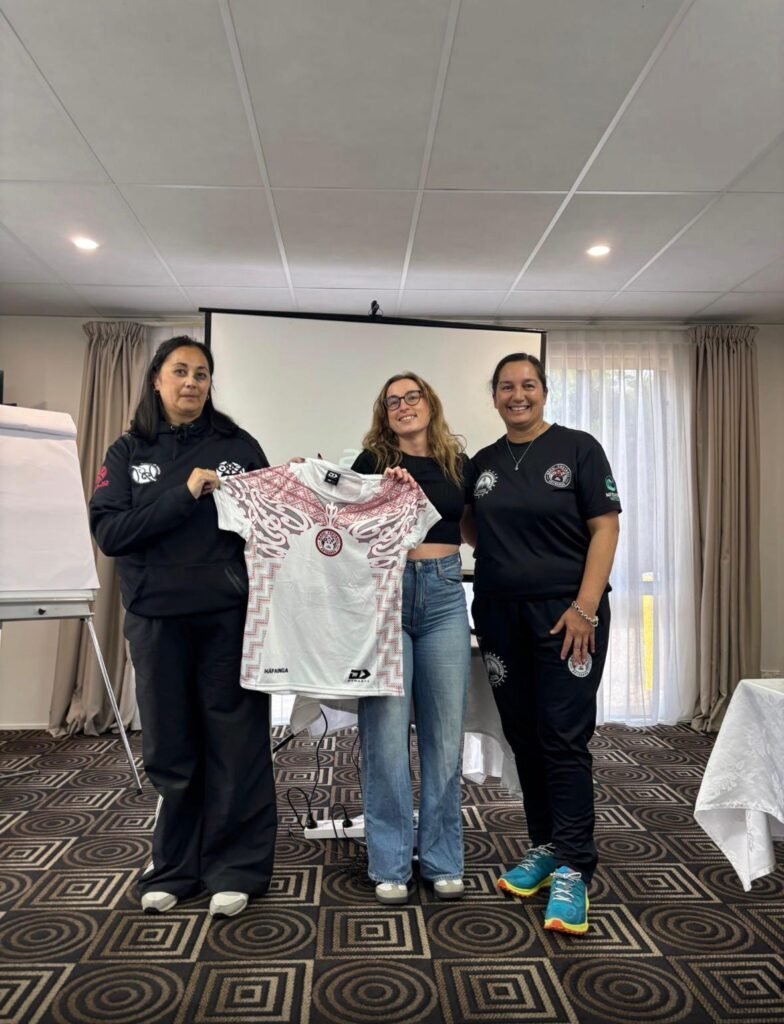
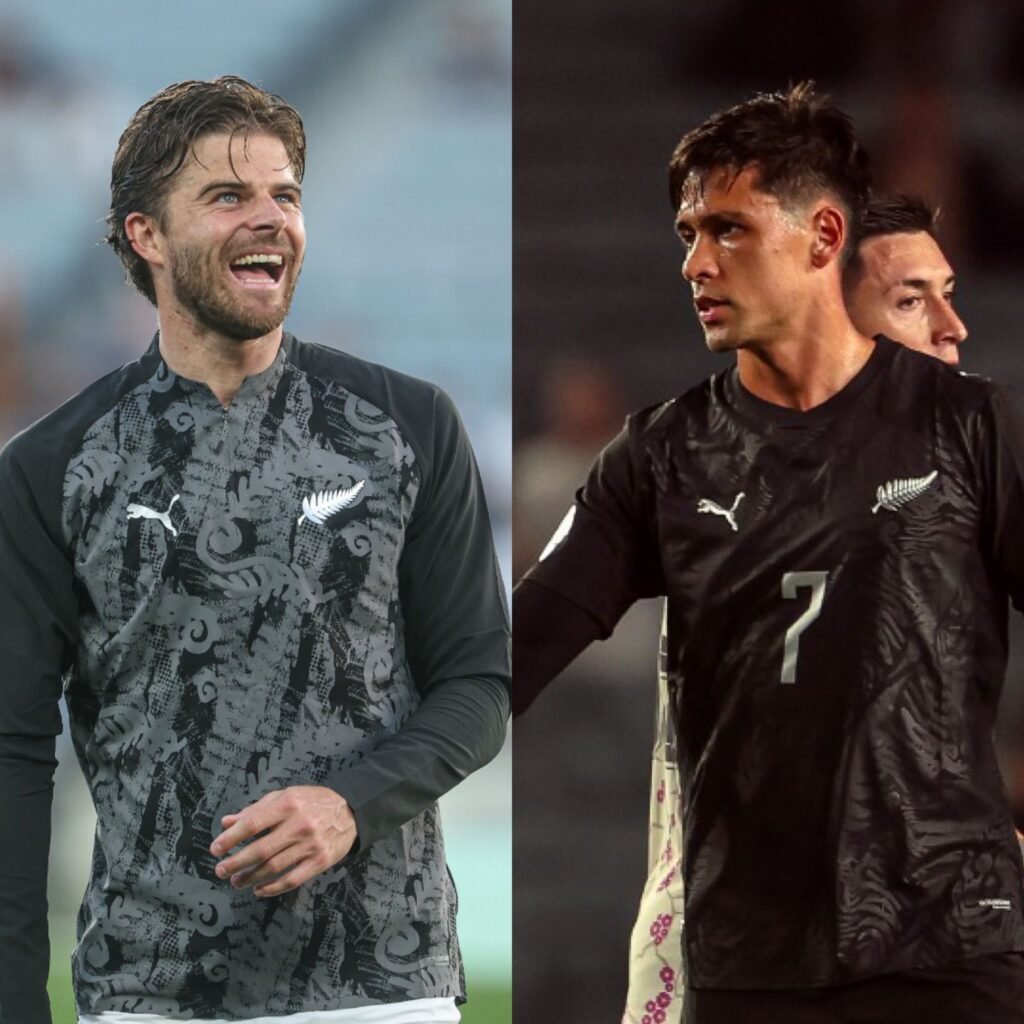
The shirt they wore, Ngā pākau āwhina o te Kererū, was not just a playing strip. It carried mauri, mana, whakapapa, and the legacy of Māori football Aotearoa. To put that shirt on is to step into something larger than yourself — a kaupapa carried by those who came before and strengthened for those still to come. That is why this moment mattered.
The design pays recognition to all who have been involved
& contributed to MFA since its humble beginnings.
A group of 14 to 17-year-old Māori stepped into a national Māori football environment against a full international youth team. Tonga received a serious preparation match. MAUI Aotearoa strengthened its pathway. Both groups honoured the game through effort, respect, and exchange.
The 2–1 result to Tonga will be recorded as the match outcome. But the legacy of the day sits in something deeper.
It sits in the coming together.
It sits in the willingness to support each other. It sits in Polynesian football communities recognising that our pathways are stronger when they are connected.
This is how Pacific football can grow — not only through programmes, tournaments, and structures, but through culture, relationship, and exchange. MAUI Aotearoa and Tonga U19 showed that the future of Pacific football is not only built by competing against each other.
It is strengthened by walking the pathway together.